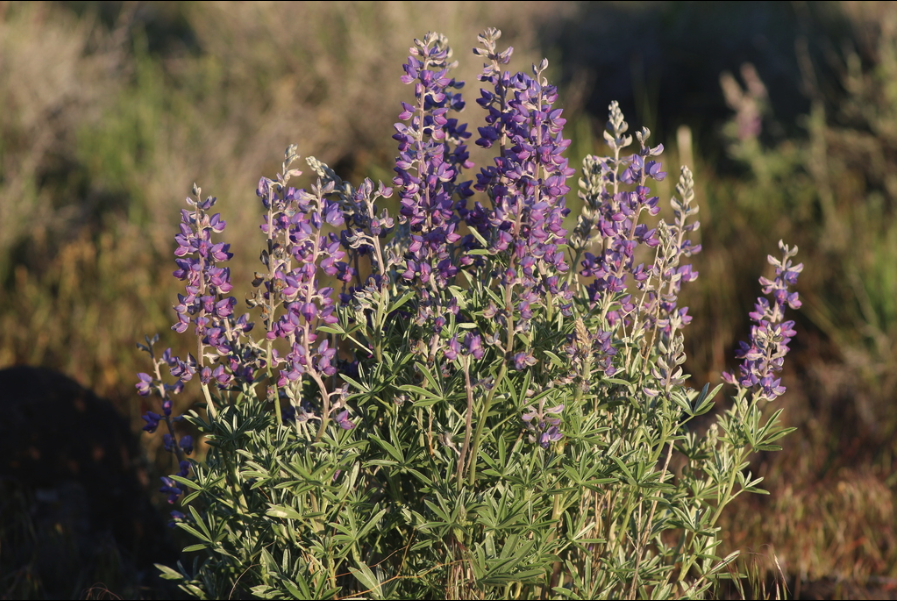
Tailcup Lupine (Lupinus caudatus) is a perennial forb native to Western US states (such as Nevada, Utah, Idaho, Oregon, and California) that can thrive in USDA Zones 4–8. Reaching a mature height of 1.5–3 feet with a bushy, woody-based growth habit, it features palmately compound leaves covered in dense silky silvery hairs and produces tall spikes of deep blue to purple pea-like flowers with long pointed tails. It thrives in dry, rocky or sandy mountain slopes and sagebrush steppes in full sun and is ideal for dryland slope stabilization, nitrogen fixation, and native bee support.
Drought tolerant, leguminous native perennial with deep violet-blue flowers, blooming May to September. Occurs in a variety of habitats including grasslands, sagebrush, shrublands and open forests; up to 11,500 ft. elevation. Prefers well-drained soils. Deep taproot allows it to survive and respond to wildfires. Seeds are eaten by various birds. Important pollen source for bees and other pollinators. One of the most poisonous lupine species to livestock.
Species Attributes
Seeds Per lb
18000
Growing Region
California
Native
Intermountain West, Pacific Northwest
Life Form
Forb, Legume
Life Cycle
Perennial
Light Requirements
Sun
Precipitation Requirements
Low, Medium
Mature Height
1-2 ft
Flowering Season
Spring, Summer
Cool/Warm Season
Bloat/Non-Bloat
Bloom Color
Purple, Blue
Bunch/Sod
Join our newsletter to stay up to date.
By subscribing you agree to with our Privacy Policy and provide consent to receive updates from our company.