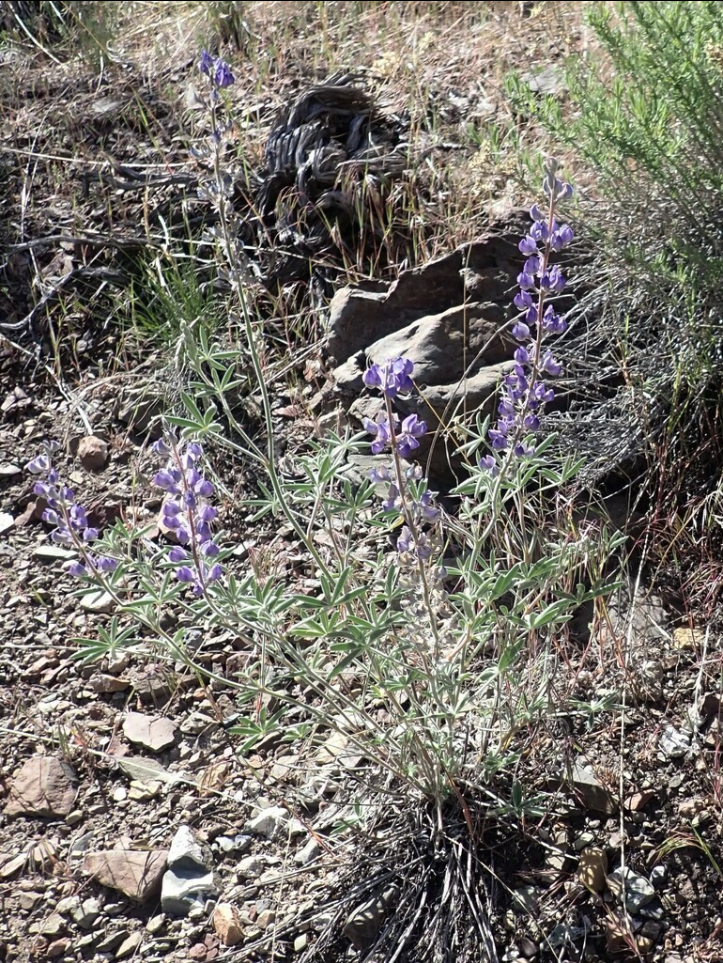
Silvery Lupine (Lupinus argenteus) is a perennial forb native to Western US states (such as Colorado, Utah, Wyoming, Idaho, and Montana) that can thrive in USDA Zones 3–7. Reaching a mature height of 1.5–3 feet with a bushy, multi-stemmed upright growth habit, it features palmately compound, silvery-pubescent green foliage and produces tall, dense spikes of light blue, violet, or cream pea-like blooms. It thrives in dry, rocky or sandy mountain slopes, sagebrush flats, and clearings in full sun to partial shade and is ideal for montane slope stabilization, soil nitrogen fixation, and bee conservation.
Drought tolerant, bushy leguminous native perennial with violet or whitish-blue flowers, blooming May to September. Widespread in its natural range in shrublands, grasslands and woodlands at mid to high elevations; up to 12,500 ft. Prefers well-drained soils. Aggressive colonizer after disturbance. Seeds are eaten by various birds. Important pollen source for bees and other pollinators. Poisonous to livestock.
Species Attributes
Seeds Per lb
18300
Growing Region
Southwest
Native
Intermountain West
Life Form
Shrub
Life Cycle
Perennial
Light Requirements
Sun
Precipitation Requirements
Low, Medium
Mature Height
0-1 ft
Flowering Season
Summer, Fall
Cool/Warm Season
Bloat/Non-Bloat
Bloom Color
White, Blue
Bunch/Sod
Join our newsletter to stay up to date.
By subscribing you agree to with our Privacy Policy and provide consent to receive updates from our company.