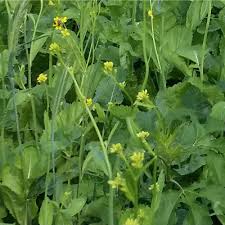
African Cabbage (Brassica carinata) is an annual forb native to southern US states (such as Florida, Georgia, and Texas) and has also been successfully introduced to North America as a non-invasive crop that can thrive in USDA Zones 3–11 as a warm- or cool-season annual. Reaching a mature height of 3–5 feet with an upright branching growth habit, it features broad, slightly glaucous green leaves and produces loose racemes of bright yellow four-petaled flowers. It thrives in well-drained loamy soils in full sun and is ideal for biofuel feedstock production, green manure cover cropping, and agricultural forage.
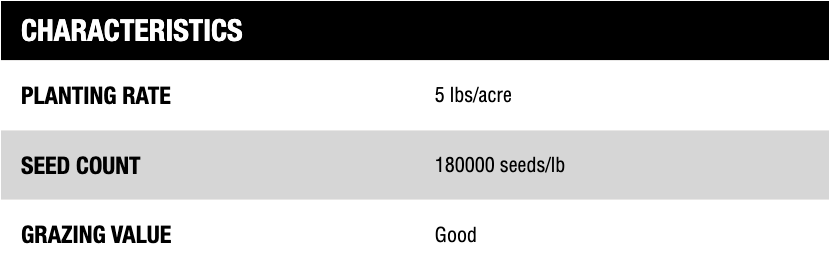
Ethiopean cabbage is a brassica with a hard erect central stem that remains upright during the winter. It provides control of several parasitic nematodes, and is excellent at trapping snow in the winter. It is less palatable than most other brassicas for livestock forage. Pure stand seeding rate 5 lb per acre, optimum planting depth is ¼-1/2 inch, and optimum planting date is August to early September.
Species Attributes
Seeds Per lb
150000
Growing Region
Southeast, Midwest
Native
Introduced
Life Form
Forb
Life Cycle
Annual
Light Requirements
Sun
Precipitation Requirements
Medium
Mature Height
1-2 ft
Flowering Season
Spring, Summer
Cool/Warm Season
Bloat/Non-Bloat
Bloom Color
Yellow
Bunch/Sod
Join our newsletter to stay up to date.
By subscribing you agree to with our Privacy Policy and provide consent to receive updates from our company.